
A veritable
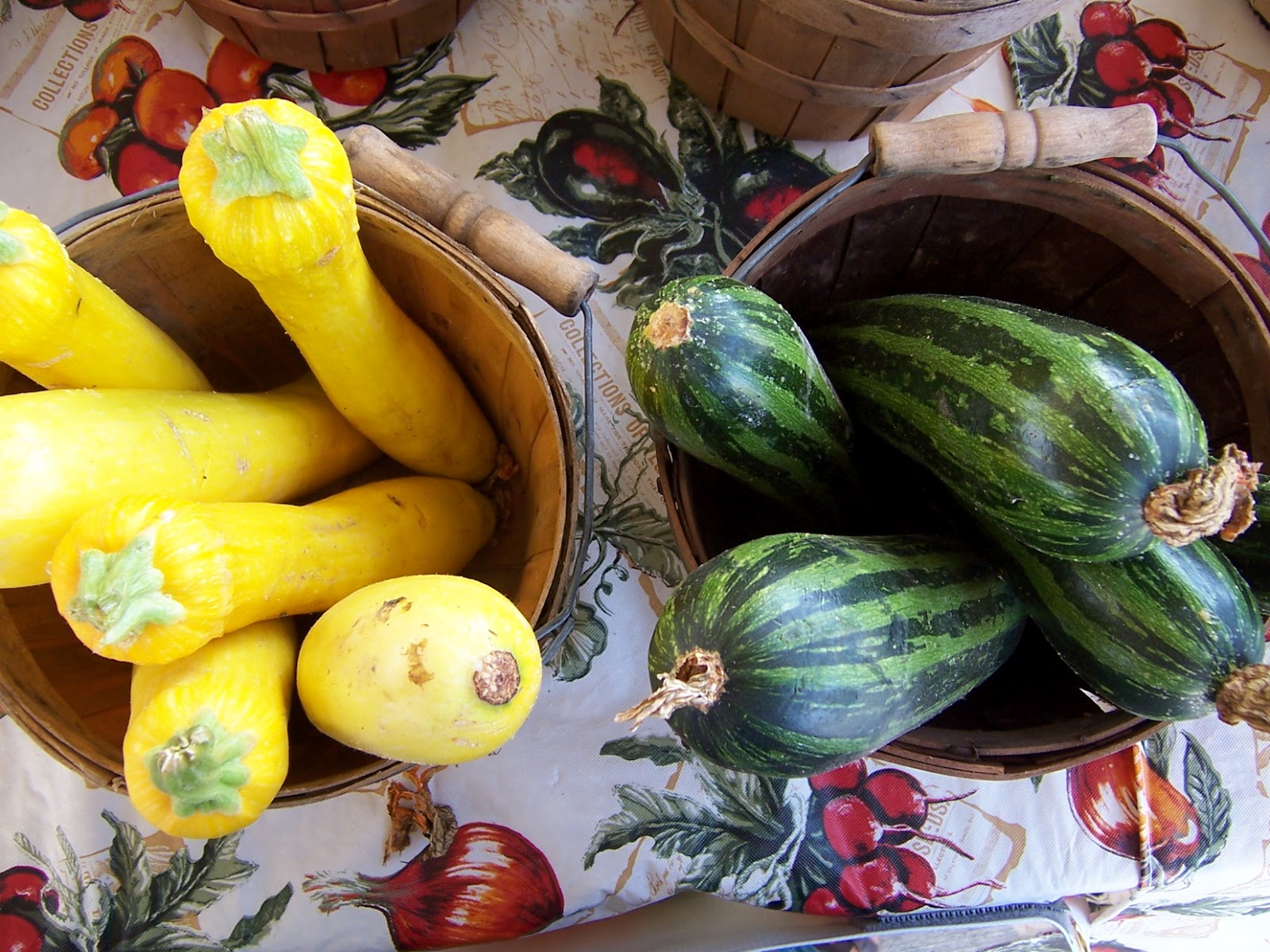
rainbow of fresh produce is available at the DeKalb Farmers' Market,
located in the pavilion behind Ace Hardware in Smithville. You can
find all kinds of squash, zucchini, and cucumbers, including some
unique varieties like striped zucchini, patty pan squash, and white
cucumbers. Green bell peppers are in, as are some hotter varieties.
The first beautiful ripe tomatoes are trickling off the vines. You
should never pass up an opportunity to try out a new variety, like
big purple tomatoes or little yellow tomatoes, and opportunities
abound right now. Beans and corn have been in abundance, but this
rain may have come too late for some farmers' crops. If you want to
put up fresh produce this year, be sure you get what's in season
while it's available.
Baked goods, mouth-smacking barbecue,
canned goods, locally roasted coffee, and luscious handmade soaps and
lotions are always available. Flower arrangements, dried and fresh
herbs, and some flower and herb plants are there to tickle your
olfactory and culinary delights.
One of the unique vegetables you'll
find at the market is a scallop squash, also known as a patty pan.
These squash are the shape of a flying saucer and are delicious and
tender even at a larger size. Try out this recipe with a locally
grown creamy white patty pan.
Grate up the squash using either a box
grater or your food processor. Place the grated squash in a
colander, sprinkle with salt, and set aside to drain for a few
minutes. Melt a couple tablespoons of butter and sauté a handful of
coarsely chopped onion just until translucent, about 2 minutes. Toss
1 tablespoon of flour with the butter and onions, and cook until the
flour turns golden brown. Stir in a couple tablespoons of half and
half to form a paste. Add the squash and cook, stirring constantly
5-7 minutes, until the excess moisture has been released to form a
creamy mixture. Stir in a couple tablespoons of sour cream and
season to taste with white vinegar, salt, and pepper. Mix in freshly
chopped dill or basil, and let chill for at least 15 minutes before
serving. You could lighten up this recipe by using milk instead of
half and half and substituting Greek yogurt for the sour cream. The
original version of this recipe can be found here: “Hungarian-Sytle Summer Squashwith Dill Recipe.”
Patty pans come in many colors, from
sunny yellow, to pale green, creamy white, green stripes on white,
light yellow stripes on mustard yellow, and even dark hunter green.
You can pick them when the squash are so young their flowers are
still attached and intact or let them get as big as a dinner plate.
Some varieties of patty pan squash can even be harvested as winter
squash.
The plants that produce these squash
can get enormous. We have one that's almost 6 feet long! They seem
less susceptible to annihilation by stink bugs and squash bugs, but
our patty pans definitely succumb to the vine borers last year.
I've heard that if you notice the
tell-tale wilting of a vine borer in action early enough that you can
cut out and destroy the offending larvae, then mound up dirt or
compost around the base of the plant, and sometimes successfully save
your squash plant.
Some growers swear by putting aluminum
foil around the base of the plant while it's young, or wrapping the
stem with panty hose to keep the bugs from boring in. We tried
putting a liberal dusting of diatomaceous earth (DE) around the
plants and on their stems early this season.
If you haven't planted squash yet,
it's not too late. Now is the perfect time since it's rained a
little, and there's more rain in the forecast. Squash love rich
soil, so add some compost and plant a squash seed. When the soil is
warm and moist, it's not unusual for them to germinate in a day.
Another of the summer's delights, the
homegrown tomato, is finally ripe. An out-of-season grocery store
tomato and a freshly picked, vine-ripened tomato are as different as
Earth is from Venus. There is nothing more triumphant to a gardener
or farmer than that first perfect tomato, still warm from the sun,
eaten right there in the garden without a knife or a napkin.
Roma and paste type tomatoes are great
for making sauce, paste, and salsa since they have fewer seeds and a
denser flesh. The smaller grape and cherry type tomatoes make an
awesome raw snack. Just rinse and pop in your mouth! Try including
the small tomatoes on your kebabs and roast them on the grill.
Slow cooked and painstakingly prepared
spaghetti sauce is a fantastic comfort food in colder weather, but
after a long day in the garden, I prefer to just throw together a
fresh sauce. I'll use any tomato I have, whether it's purple,
yellow, red, or striped; chop the tomato into big chunks. Heat up
some extra virgin olive oil, sauté a chopped onion for a minute, add
a couple cloves of minced garlic and cook for 1 minute more. Dump in
the chopped the tomatoes, add whatever herbs you have on hand, and
simmer for just a few minutes. I always use basil, but oregano,
thyme, chives, rosemary, and savory would all make great
substitutions or additions.
If you really want to can your
tomatoes, but they're trickling in slowly, you could freeze your
daily harvest and save up until you have enough to make it worth the
hassle. You can freeze them whole or cut them into big chunks. Lay
the pieces flat on a baking sheet until frozen solid then store in a
freezer bag.

A gourmet way to feature your favorite
tomato is to make a caprese salad. Get a hunk of good mozzarella
cheese—the kind that comes in a little bag with water. Slice the
cheese and tomato into ½ inch thick slices. Arrange together on a
plate, garnish with a generous amount of basil, and drizzle with a
good quality olive oil. Take this simple dish to another level by
using an usually colored tomato and a mix of purple and green basil.
If your basil gets away from you and starts blooming, you can use the
flowers to add a floral flourish to your food.
Of course, one of the best ways to
enjoy a ripe tomato is in the classic tomato and mayo sandwich. To
make your inner-foodie squeal, use fresh baked oatmeal bread and
homemade mayonnaise!


