Showing posts with label squash. Show all posts

Thursday, July 12, 2012

Scallop squash and fresh tomatoes


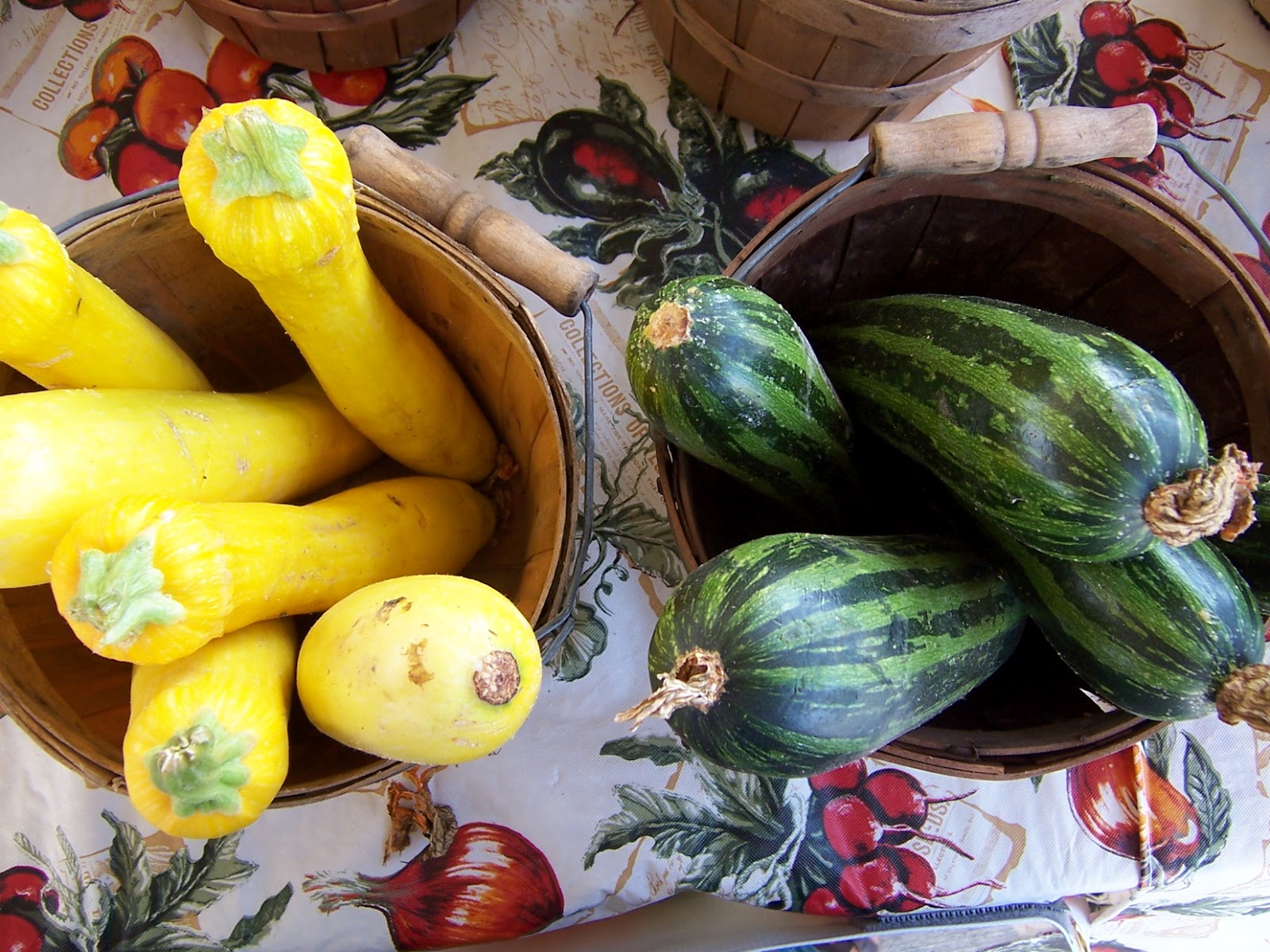
 A veritable rainbow of fresh produce is available at the DeKalb Farmers' Market, located in the pavilion behind Ace Hardware in Smithville. You can find all kinds of squash, zucchini, and cucumbers, including some unique varieties like striped zucchini, patty pan squash, and white cucumbers. Green bell peppers are in, as are some hotter varieties. 

The first beautiful ripe tomatoes are trickling off the vines. You should never pass up an opportunity to try out a new variety, like big purple tomatoes or little yellow tomatoes, and opportunities abound right now. Beans and corn have been in abundance, but this rain may have come too late for some farmers' crops. If you want to put up fresh produce this year, be sure you get what's in season while it's available. 

Baked goods, mouth-smacking barbecue, canned goods, locally roasted coffee, and luscious handmade soaps and lotions are always available. Flower arrangements, dried and fresh herbs, and some flower and herb plants are there to tickle your olfactory and culinary delights.

One of the unique vegetables you'll find at the market is a scallop squash, also known as a patty pan. These squash are the shape of a flying saucer and are delicious and tender even at a larger size. Try out this recipe with a locally grown creamy white patty pan. 

Grate up the squash using either a box grater or your food processor. Place the grated squash in a colander, sprinkle with salt, and set aside to drain for a few minutes. Melt a couple tablespoons of butter and sauté a handful of coarsely chopped onion just until translucent, about 2 minutes. Toss 1 tablespoon of flour with the butter and onions, and cook until the flour turns golden brown. Stir in a couple tablespoons of half and half to form a paste. Add the squash and cook, stirring constantly 5-7 minutes, until the excess moisture has been released to form a creamy mixture. Stir in a couple tablespoons of sour cream and season to taste with white vinegar, salt, and pepper. Mix in freshly chopped dill or basil, and let chill for at least 15 minutes before serving. You could lighten up this recipe by using milk instead of half and half and substituting Greek yogurt for the sour cream. The original version of this recipe can be found here: “Hungarian-Sytle Summer Squashwith Dill Recipe.”

Patty pans come in many colors, from sunny yellow, to pale green, creamy white, green stripes on white, light yellow stripes on mustard yellow, and even dark hunter green. You can pick them when the squash are so young their flowers are still attached and intact or let them get as big as a dinner plate. Some varieties of patty pan squash can even be harvested as winter squash. 

The plants that produce these squash can get enormous. We have one that's almost 6 feet long! They seem less susceptible to annihilation by stink bugs and squash bugs, but our patty pans definitely succumb to the vine borers last year.
I've heard that if you notice the tell-tale wilting of a vine borer in action early enough that you can cut out and destroy the offending larvae, then mound up dirt or compost around the base of the plant, and sometimes successfully save your squash plant. 

Some growers swear by putting aluminum foil around the base of the plant while it's young, or wrapping the stem with panty hose to keep the bugs from boring in. We tried putting a liberal dusting of diatomaceous earth (DE) around the plants and on their stems early this season.

If you haven't planted squash yet, it's not too late. Now is the perfect time since it's rained a little, and there's more rain in the forecast. Squash love rich soil, so add some compost and plant a squash seed. When the soil is warm and moist, it's not unusual for them to germinate in a day.

Another of the summer's delights, the homegrown tomato, is finally ripe. An out-of-season grocery store tomato and a freshly picked, vine-ripened tomato are as different as Earth is from Venus. There is nothing more triumphant to a gardener or farmer than that first perfect tomato, still warm from the sun, eaten right there in the garden without a knife or a napkin.
Roma and paste type tomatoes are great for making sauce, paste, and salsa since they have fewer seeds and a denser flesh. The smaller grape and cherry type tomatoes make an awesome raw snack. Just rinse and pop in your mouth! Try including the small tomatoes on your kebabs and roast them on the grill. 

Slow cooked and painstakingly prepared spaghetti sauce is a fantastic comfort food in colder weather, but after a long day in the garden, I prefer to just throw together a fresh sauce. I'll use any tomato I have, whether it's purple, yellow, red, or striped; chop the tomato into big chunks. Heat up some extra virgin olive oil, sauté a chopped onion for a minute, add a couple cloves of minced garlic and cook for 1 minute more. Dump in the chopped the tomatoes, add whatever herbs you have on hand, and simmer for just a few minutes. I always use basil, but oregano, thyme, chives, rosemary, and savory would all make great substitutions or additions.

If you really want to can your tomatoes, but they're trickling in slowly, you could freeze your daily harvest and save up until you have enough to make it worth the hassle. You can freeze them whole or cut them into big chunks. Lay the pieces flat on a baking sheet until frozen solid then store in a freezer bag.


A gourmet way to feature your favorite tomato is to make a caprese salad. Get a hunk of good mozzarella cheese—the kind that comes in a little bag with water. Slice the cheese and tomato into ½ inch thick slices. Arrange together on a plate, garnish with a generous amount of basil, and drizzle with a good quality olive oil. Take this simple dish to another level by using an usually colored tomato and a mix of purple and green basil. If your basil gets away from you and starts blooming, you can use the flowers to add a floral flourish to your food.

Of course, one of the best ways to enjoy a ripe tomato is in the classic tomato and mayo sandwich. To make your inner-foodie squeal, use fresh baked oatmeal bread and homemade mayonnaise!

Monday, July 9, 2012

Squash season


There's nothing like the first summer squash feast of the season. Those golden, tender slices cooked with onions. Or made into a creamy casserole with cheese, bread crumbs or crackers, and a little milk, seasoned with just a little salt and pepper. The succulent, slightly sweet flesh is so versatile that it pairs deliciously with many other garden veggies.

A couple plants can keep a family's table covered in squash every day for weeks. Its versatility is a major boon, since those sunny yellow squash can really pile up when the season gets going.

Summer squash is full of many important nutrients, including B-vitamins, vitamin C, molybdemun, manganese, and fiber, in addition to being a great source of omega-3 fatty acids, which are lacking in the typical Western diet.
When you're selecting summer squash, choose squash with unblemished, tender skin. If you get any with bruises, you should use those first. Unblemished squash will keep in the fridge for at least a week.

To maintain more the great nutrients in summer squash, avoid boiling it and be sure to eat the skin. You can slightly steam, roast, grill, sauté, and even freeze squash and still maintain all its nutrients. 

Skewer baby squash, brush with olive oil, sprinkle with salt and pepper, and throw them on a hot grill until tender. Wrap up the whole baby squash or chopped large squash in an aluminum foil packet, place on the grill away from the direct heat, and by the time your chicken or hot dogs are done, the squash will be perfectly cooked. You can also just toss baby squash or chopped squash with olive oil, sprinkle with salt and pepper, and roast in the oven at 325 for about twenty minutes. You can add whole baby onions or thick slices of onion to any of those cooking methods with delicious effect.

To freeze squash, thickly slice the bigger fruit or use the little ones whole. Lightly blanch, then freeze in a single layer on a cookie sheet. After frozen solid, place them in an airtight bag. When you defrost it, put you can put it on the grill, sauté, or steam the squash, and it will be almost as good as it is fresh.

One of our farm's favorite ways to cook up squash or zucchini is to sauté it with some swiss chard. Slice up some onions and squash into ¼ inch thick slices. Strip the chard leaves off the ribs and chop the ribs into inch long sections. Sauté the onions, squash, and chard ribs for 3-4 minutes in extra virgin olive oil or coconut oil over medium-high heat. Add the ripped up chard leaves and cook for another 4-5 minutes. Season with sea salt and fresh pepper and a dash of white whine vinegar. The color combination of this dish is out of this world.

Sauteed squash with chard makes a great side dish that's packed with vitamins and minerals. In addition to an array of phytonutrients and antioxidants, both squash and chard are rich in fiber, which helps regulate the speed at which carbohydrates are converted to simple sugars during the digestive process. Regulating that process minimizes blood sugar spikes. Maximizing your consumption of fresh produce is a great way to help manage diabetes. 
 
You can turn your sautéed squash, onions, and chard into a meatless main course dish by combining it with a whole wheat chunky pasta or tortellinis. The combination of the vegetables and pasta provide you with plenty of protein for a complete meal, but the flavors go great with a meat addition, too.
image from www.crumblycookie.net
Another creative way to use squash and zucchini is to grate the whole thing, skin on, and use it as a beautiful, edible garnish. You can serve it over a great green salad, or feature the grated squash and zucchini as its own salad. Dress the grated flesh with some a red wine vinaigrette. To make the vinaigrette, combine red wine vinegar and extra virgin olive oil at a 1 to 3 ratio and season with a touch of salt and pepper. Toss with some freshly chopped basil, mint, or oregano for a gourmet touch.

Eating healthy and fresh is easy when there's so much great produce around. Be sure to check out the market this week and load up on healthy, beautiful food for your family!

Wednesday, May 30, 2012

Planting those babies


Written by: Karley Thompson

The market was bustling last week! If you want to try those chicken thighs and Boston butts everyone is talking about, you'll have to get there pretty early. Fried pies, baked goods, granola, soaps, lotions, salsa, pork rinds, fresh and dried herbs, early season lettuce, kale, and garlic scapes will all be available this week. You can also pick up herb, flowers, squash, and tomato plants.

The market will have a grand re-opening event on Saturday, June 9th! Most of the produce vendors will have fresh veggies by then, and then we'll really get the 2012 season cranking. 

It's the perfect time for planting those veggie bedding plants. The soil is good and moist from this past weekend's rain, and unless it all peters out before it gets here, there's a chance for more rain the forecast. We usually plant in the late afternoon or early evening, after the heat of the day has passed and the garden is shady, or on cloudy days. It can be hard on the little plants if you put them out on a hot, bright sunny day. If that's the only time you can get out in the garden, you can ease the trauma by being very gentle with their roots, giving them a good drink, and maybe providing a little shade that first day.

Some plants are hardier than others, as far as how much abuse they'll tolerate and still give you good production. For example, plants in the cucurbitaceae family, like squash, melon, and cucumber, are extremely tender. They are particularly unappreciative of having their roots disturbed, and they don't perform very well after becoming root bound in pots. We do transplant some squash and cucumbers, but we are extremely gentle when handling their roots balls. We're also sure to get them in ground by the time they have their fourth set of true leaves. These plants practically grow before your eyes, and their roots grow even faster. That's why most people skip the delicate transplanting and just direct sow these crops.

The cucurbitaceae are nutrient hogs and will pretty much take as much compost as you can give them. These are often the volunteers that pop up from compost piles, or wherever the chickens drop the seeds. Since they grow in compost piles, it's probably not surprising that they'll grow in a hill of mounded compost. Most gardeners plant two or three seeds per hill and thin to the strongest plant. Cucumbers, vining squash, and even melons appreciate being trellised, but be sure to use sturdy materials. For the heavier fruit, you'll even need to make a sling.

Not all plants needs such tenderness, though. The tomato plant can take a lot, perk up, and then produce a lot. Last year we got way behind on our transplanting to-do list and ended up with dozens of tomato plants that were floppy, almost two feet tall, and still in their 4 inch containers. We picked off the suckers and leaves up about 75% of the stem, used a post hole digger to dig some massive holes, and laid the plants on their sides. Once we filled in the dirt, only about 25% of the plants were left above the soil. Those plants ended up being over 7 feet tall and continued producing through those two scorching months without rain and without irrigation. When we pulled the plants up at the end of the season, we could see that the entire buried stem had sprouted a 
serious root system. 

Peppers can also tolerate quite a bit of abuse, once temperatures are comfortably warm. Small pepper plants will sulk after cool nights and will just huddle down and not grow very quickly if the days aren't warm enough. Not to worry; the weather right now is perfect, so get those pepper plants outside. The stems of pepper plants will also sprout roots, so we also bury the peppers deeper than they are planted in their containers. 

We're experimenting with the peppers this year. We buried up to 75% of the stem of some of the peppers, and others we only buried about 25%. I'll report later in the season and let you know how the experiment is going. 

Peppers and tomatoes are heavy feeders, so they benefit from soils with a lot of organic matter. Both of these nightshade cousins may develop blossom end rot, drop their flowers, or produce cracked fruit with uneven watering, so we always use a thick layer of organic mulch to keep in the moisture. As I've mentioned before, we use old hay. Many gardeners prefer not to use hay because of the weed seeds, but it is locally available and provides drastic moisture retention and soil tilth improvement, so we deal with the weeds.

Many gardeners find that foliar feedings of an Epsom salt dilution are beneficial to pepper and tomato plants. Epsom salt contains magnesium and sulfur in a highly soluble form. Lime is a common garden amendment to the highly weathered, acidic clay soils in our region, since lime is composed of calcium carbonate, which is a base. In addition to raising the pH, lime adds calcium to the soil, but soil calcium and magnesium must be in the proper balance in order for the plants to be able to utilize the available calcium. Since the magnesium in Epsom salts is highly soluble, it provides a boost of nutrients to the plants. 

One tablespoon to a gallon is all you need for a good Epsom salt foliar feeding. Foliar feeding means fertilizing your plants by spraying a solution on their leaves. Very early morning is the best time for foliar feeding. You don't want to spray the solution during the heat of a sunny day because the plants need to be able to respire to tolerate the heat. Many gardening advice sources advise not to spray in the evenings, so as to not encourage mildew problems. That being said, we almost always spray in the evenings because that's when we get around to it. Thus far, we haven't had any mildew problems. 

If you're concerned or just curious about the nutrient levels in your soils, you can have your soil tested through the local extension office or a private lab. If you're not sure if your pepper and tomato plants would benefit from an Epsom salt feeding, you can always do an experiment and only spray one or two of your plants and compare their performance over a couple days or weeks.

Part of the fun of gardening is experimentation, and all the exercise you get from growing all that fresh, healthy produce is a great perk. Experimenting with new methods and unusual varieties keeps each year exciting and each iteration of your garden novel. Coming up with new trellising ideas, or garden layouts, or hypotheses as to why one plant out performed another or the beans were better last year than this year exercises your mind, and you can't help but do dozens of repetitions of glute, hamstring, and quadricept exercises out in your garden!